The vast selection in the world of coffee today can be overwhelming even for experienced coffee lovers. There are many different countries, roast levels, blends and packaging on store shelves. A decade ago, many people chose from a few big brands, but in recent years the situation has changed - small, artisanal roasters have become popular all over the world. They offer fresher, higher-quality coffee, allow you to get to know the true diversity of tastes and discover what suits you best. So how do you choose coffee beans?
In this guide, we'll explain the differences between coffee types, roast levels, regional flavors, and why freshness is important. Read on to learn how to choose the coffee beans that best suit your taste.
Arabica or Robusta: where to start?
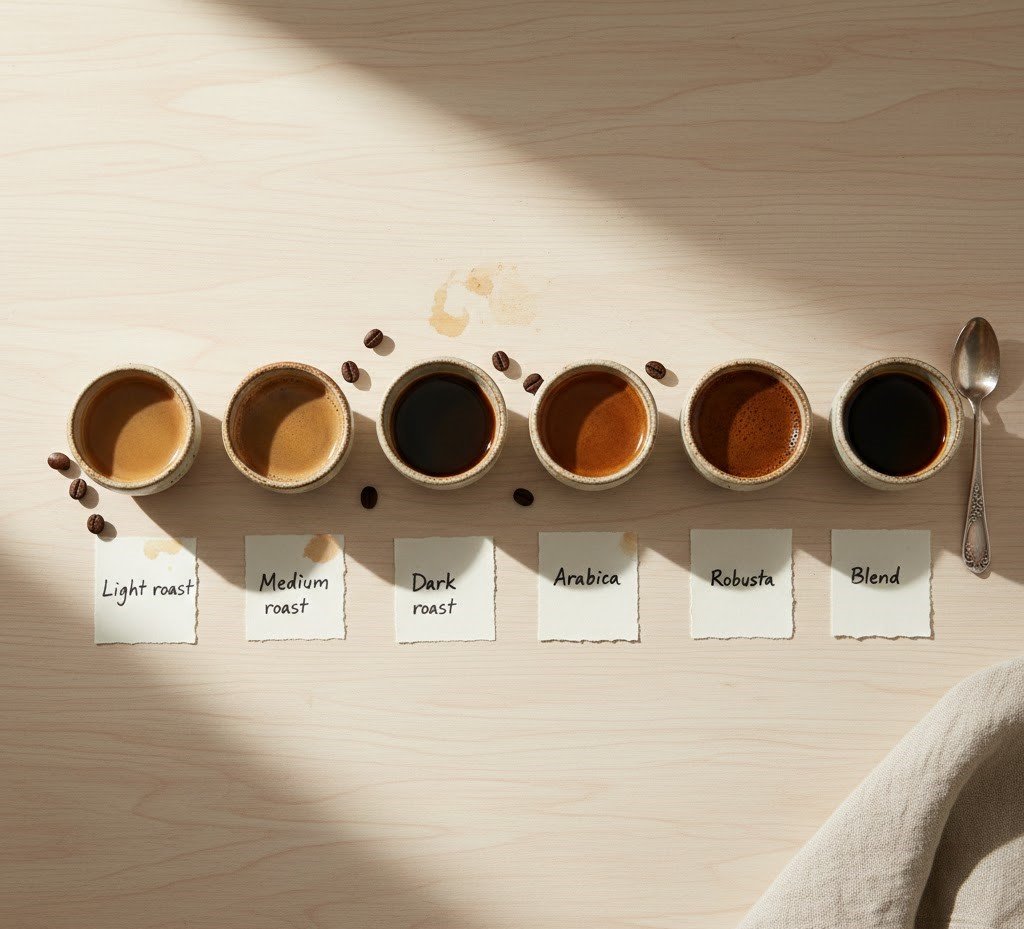
There are two main types of coffee in the world – Arabica (Coffea arabica) and Robusta (Coffea canephora). Although we often see them in the trade mixtures, it is worth understanding how these beans differ.
Arabica is considered a higher quality coffee – it is grown at high altitudes, where slow maturation allows for a complex flavor to develop.
- Taste: fruity, sweet, with a pleasant acidity
- Less caffeine (~0.8–1.5 %)
- The beans are elongated, with a curved indentation.
- Suitable for those who appreciate subtlety, clean taste and variety of aromas
Robusta is a more resistant species, more often grown in lowlands.
- Taste: more bitter, earthy, with intense foam
- More caffeine (up to 2.7 %)
- The beans are rounder, with a straight indentation
- Good for espresso blends when more body and strength is desired
When to choose mixtures?
Blends (e.g. 80% Arabica and 20% Robusta) are often created to achieve a balance between smoothness and body. If you like your espresso with a rich crema, a blend with a little Robusta will be a great choice.
The influence of roast level on taste
Coffee beans are naturally green and have neither the aroma nor the taste that we associate with coffee. It is only during roasting that hundreds of aromatic compounds are revealed, which determine the final result. The level of roasting is one of the most important selection criteria.
1. Light roast
Lightly roasted beans retain more natural fruity and acidic notes.
- Taste: berries, citrus, flowers
- Light body, brighter acidity
- Ideal for filter coffee, pour-over or Aeropress method
- Most often associated with the world of specialty coffee
2. Medium roast
An intermediate option, loved for its balanced taste.
- Flavor: caramel, nuts, mild chocolate
- Medium body, mild acidity
- Perfect for both filter and espresso lovers
Medium roast is considered the most versatile choice – it retains the natural characteristics of the coffee, but at the same time adds more sweetness and warmth. It is a compromise between light and dark roast: aromatic enough, but not too sour; rich enough, but not too bitter. Therefore, many coffee masters call it the „sweet spot“, allowing you to get to know the origin of the bean, but at the same time enjoy a harmoniously balanced cup.
3. Dark roast
Dark roasted beans have a rich, bitter profile.
- Flavor: cocoa, burnt sugar, spices
- Heavy body, intense aroma
- Most often used for espresso or coffee machines when a strong flavor is desired
The darker the roast, the more pronounced the roast flavor and the less regional characteristics remain. So if you want to get to know the character of a coffee from a specific origin, choose a lighter or medium roast.
Flavors of the World: A Regional Guide
Different regions The world of coffee is like a vast expanse of vineyards. Soil, climate and processing methods create a unique blend of flavors. Here are a few examples:
South America
- Brazil: smooth, sweet, with notes of nuts and cocoa. A great choice for those who want a balanced, less acidic coffee
- Colombia: caramel, almonds, citrus. Has a mild acidity and a pleasant aftertaste
Africa
- Ethiopia: fruity, floral profile – often with hints of blueberry, jasmine or citrus. Suitable for those looking for a more interesting, complex taste
- Kenya: bright acidity, berry and wine notes, long lasting aftertaste
Asia
- Indonesia (Sumatra): earthy, spicy flavor, thick body
- Vietnam: Robusta is often used – intense, bitter, highly caffeinated
How to choose?
- If you like a mild, nutty coffee – try Brazil
- If you want brighter, fruity notes, choose Ethiopia or Kenya.
- If you are looking for a stronger body – try Sumatran or Vietnamese coffee
More about the characteristics of coffee regions can be found Specialty Coffee Association website.
Freshness: why is it important?
Freshness is an often underestimated but essential factor in coffee quality. Even the best beans lose their aroma a few weeks after roasting.
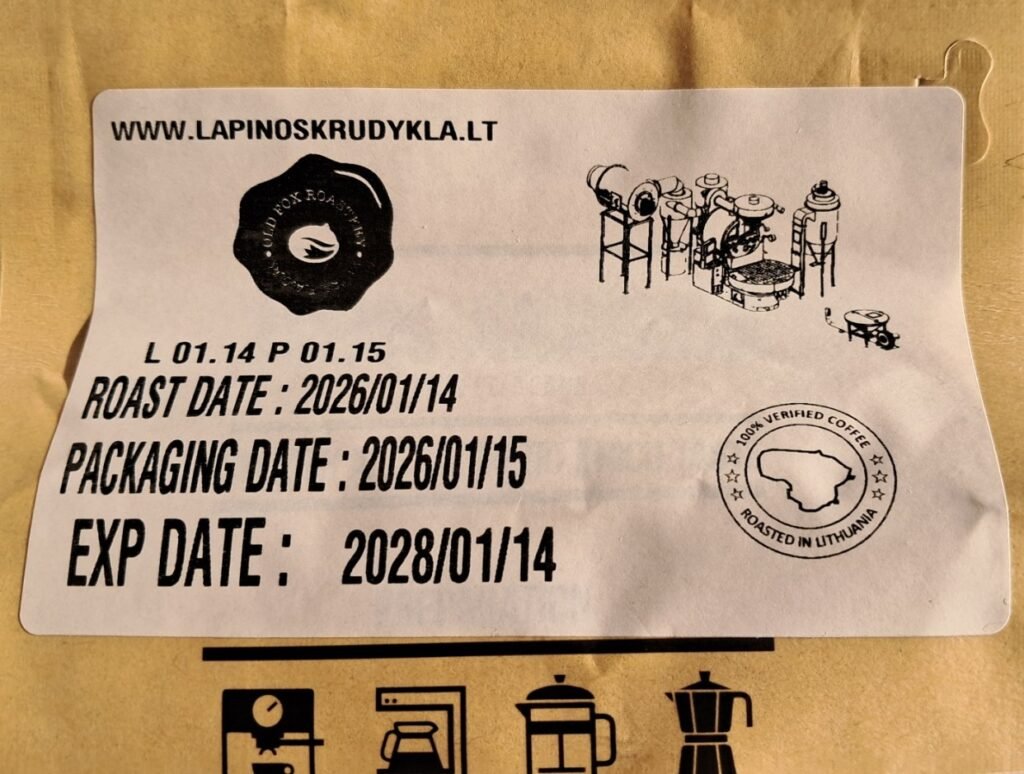
The roasting date is a key indicator to look at. If it is not on the package, it is a signal that the coffee may have been stored for a long time. In supermarkets, we often find coffee that was roasted several months or even a year ago - it has already lost its aroma and becomes flat in taste.
Coffee is alive – it releases carbon dioxide for several days after roasting, and its true flavor is revealed after 5-10 days. It is best consumed within 4-6 weeks of the roasting date.
The advantage of small roasters is that they roast in small batches, so the beans reach customers in just a few days. This means more aroma, more flavor, and less bitterness.
At Lapino's Roastery, all coffee packages have a clear roasting date so you can be sure of freshness.
How to choose the best coffee beans for you?
- By preparation method:
- For the filter – choose a lighter roasted Arabica (e.g. Ethiopia, Colombia)
- Espresso – darker roast, possibly with a little Robusta (e.g. Brazil, Sumatra)
- To taste:
- You want sweetness and tenderness – Brazil, Colombia
- Looking for fruits and flowers – Ethiopia, Kenya
- You like a stronger, more bitter taste – Vietnam or Indonesia
- By freshness:
- Always check the roasting date
- Store coffee in an airtight container in a cool, dark place.
How to choose coffee beans? Summary
When choosing coffee beans, it is worth considering four essential things:
- Type (Arabica, Robusta or blend)
- Browning level
- Region of origin
- Freshness
Coffee is not just a drink, it's an experience. Every cup can tell a different story – from the highlands of Ethiopia to a small roastery in Kaunas. Discover which beans best suits your taste, and enjoy the coffee you know.