

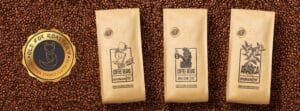
What is espresso coffee?
Espresso coffee is a symbol of Italian coffee culture, a true benchmark in the coffee world. It is an intense, concentrated drink obtained when hot water (about 90-94°C) is passed through finely ground coffee beans at a pressure of 9 bars. This process takes just 25-30 seconds, but in that short moment even the smallest nuances of taste and aroma are extracted from the coffee - from caramel to cocoa, from the tartness of berries to the depth of dark chocolate.
Espresso is the basis of all classic coffee drinks, from cappuccino to latte. But it is also a separate, independent process that requires care, technique and sensitivity.
The history of espresso coffee
The history of espresso begins in Italy at the end of the 19th century, when Luigi Bezzera patented the first coffee machine powered by steam pressure in 1901. This invention changed everything - people could enjoy coffee quickly, without a complicated process and with perfect taste. The word itself espresso derived from Italian express, meaning "to squeeze out" or "to produce quickly.".
Later, the technology improved - in 1938 Achille Gaggia introduced the first lever machine, which allowed for the creation of the so-called cream – a light brown foam that has become a sign of quality espresso. Since then, espresso has become an integral part of global coffee culture.
Espresso brewing mastery
Making espresso is an art of precise proportions and sensations. The ideal serving is about 18-20 g. ground coffee, which yields 35–40 ml of the drink. However, the result depends not only on the numbers - the coarseness of the grind, water temperature, pressure, freshness of the coffee and even air humidity are important.
Every barista or coffee enthusiast strives for the perfect balance between sweetness, acidity and bitterness. A good espresso should not be bitter – it should be rich, balanced and have a long aftertaste.
Coffee beans for making espresso
Suitable coffee beans – is the foundation of all espresso. Traditionally, medium or darker roasted beans are used to make espresso, which gives the drink body, a mild bitterness and a long-lasting aftertaste. However, modern coffee culture invites you to discover lighter roasts – they highlight the natural sweetness, fruitiness and complexity, giving espresso new nuances.
The most popular espresso choices in the world – Brazilian beans for the nutty and chocolate notes, Colombian – for the balance of sweetness and acidity, Ethiopian – for its floral and fruity tones, and Guatemalan, whose profile combines the warmth of cocoa and the freshness of citrus. Each region brings its own character – from mild Costa Rican to the lusher Sumatra.
Espresso today
Modern espresso has evolved – it is not just the traditional Italian shot, but also a multitude of interpretations adapted to the origin of the beans, the roast profile or even the water of the region. At many coffee festivals and championships, baristas use espresso as a medium to experiment and showcase the potential of coffee.
Espresso coffee becomes a bridge between the old and new coffee cultures – combining artisanal precision, technology, and emotion.
Step-by-step instructions for making espresso coffee
Ingredients needed:
- 8-10 g freshly roasted coffee beans per espresso
- 16–20 g coffee beans for a double espresso (doppio)
- 25–35 ml filtered water (final amount)
1. Grind the coffee beans precisely
Finely grind the desired amount of coffee beans (8-10g for a single espresso, 16-20g for a double espresso). The grind size should be very fine, resembling fine salt. Critical aspect: The quality of the grind will directly affect the extraction speed and final flavor.
- Use a burr-type grinder for even grinding
- Grind only before brewing – the aroma of ground coffee quickly disappears
- The grind size should resemble fine salt or the consistency of powdered sugar.
2. Form the coffee tablet in the portafilter

Place the ground coffee in the portafilter of the coffee machine and press it gently but firmly with a special tamper. The pressing force should be about 15-20 kg. Tamping technique:
- Evenly distribute the coffee in the portafilter with your fingers
- Hold the tamper perpendicular to the surface of the portafilter
- Press evenly and firmly, creating a smooth surface
- Smooth the surface with a light twisting motion.
3. Prepare the espresso machine

Rinse the coffee machine with hot water to remove residue from previous brewing and to warm up the system. Then firmly screw the portafilter with the formed coffee tablet back into place. Important aspects:
- The machine must be warmed up to the optimal temperature (90-96°C)
- Rinse the group head without a portafilter
- Screw the portafilter firmly, but not too tightly
4. Extract espresso at the exact time

Start extraction and let the coffee flow for 25-30 seconds, during which time 25-35 ml of excellent espresso will be delivered. Ideal extraction profile:
- First 5 seconds: The coffee should start to drip like dark honey.
- 5-20 seconds: A steady, dark gold stream
- 20-25 seconds: The stream begins to lighten, crema is formed
- 25-30 seconds: Stop when the coffee starts to flow very light.
Professional espresso master tips
Solving extraction problems
- Over-extraction: If the coffee machine brews coffee too slowly (>35 sec), try grinding the coffee beans coarser or reducing the amount of coffee. Symptoms: bitterness, sour taste.
- Under-extraction: If the machine brews coffee too quickly (<20 sec), grind the coffee finer or increase the amount of coffee. Symptoms: sour, weak taste.
- Portafilter optimization: You can also try a different size coffee maker strainer (filter) – different portafilter sizes can improve the quality of extraction.
Coffee quality criteria
- Coffee freshness: Use freshly roasted coffee beans – ideally 7-21 days after the roasting date. Coffee that is too fresh (< 7 days) may not have absorbed the flavors well, and coffee that is too old (> 30 days) will lose its aromas.
- Water quality: Quality water makes 90% espresso. Use filtered water with a mineral content of 150-300 ppm for optimal results.
- Temperature control: The ideal water temperature for espresso extraction is 90-96°C. Lower temperatures will produce a more acidic coffee, higher temperatures will produce a more bitter one.
The subtleties of espresso art
Crema – the crown of espresso
The perfect espresso must have the creamy top (crema) – is a naturally formed foam from coffee oils and CO2 gas. High-quality crema:
- Golden-brown with darker streaks
- 2-4 mm thick
- Remains for 1-2 minutes after preparation
- Gently "pulls back" from the edge of the spoon
Espresso coffee: a world of variations
- Ristretto: Shorter extraction (15-20ml in 25s) – more concentrated flavor
- Lungo: Longer extraction (45-60ml in 35-40s) – milder coffee
- Double: Double espresso (16-20g coffee → 50-60ml)
The best coffees for making espresso
Medium to dark roast coffee beans with strong chocolate, caramel and nutty aromas are ideal for the espresso method. Recommendations for Lapina Bakery:
- „"Supremo" blend – classic espresso blend with notes of chocolate and caramel
- „"Super Crema" blend – specially designed for a bright crema layer
- „"Brazil"” single origin – nutty aroma with a chocolate finish
- „"Guatemala" origin – complex flavor with nuances of spices
Hardware maintenance and cleaning
Regular maintenance of your espresso machine is essential for quality results:
- Daily: Rinse the group head after each use
- Week: Clean the portafilter and filter baskets with a special cleaner
- Month: Perform a backflush procedure with cleaning powder
- 2-3 months: Descaling with a special solution
Conclusion: The perfect espresso is a combination of art and science that requires knowledge, experience and quality ingredients. By following these professional steps and tips, you can enjoy a true Italian coffee culture experience at home and create espresso that rivals the best baristas in the world.