


How to make coffee with a Chemex coffee maker: a combination of elegance and taste
The Chemex coffee maker is more than just a coffee maker, it is a true work of art, recognized as a legendary design object and in the permanent collection of the Museum of Modern Art (MoMA) in New York. Created in 1941 by German chemist Dr. Peter Schlumbohm, the Chemex combines elegant glass forms with functionality, providing an unparalleled coffee-making experience.
Chemex History and Design
Dr. Peter Schlumbohm, when designing the Chemex, followed the Bauhaus principles - form follows function. The elegant sand-shaped glass container with a wooden strap and leather wrist is not only beautiful to look at, but also practically functional. The uniqueness of the Chemex lies in the special filters, which are 20-30% thicker than conventional coffee filters.
The design of this device has stood the test of time to the point that it is still produced according to the original 1941 design. Chemex has become an icon of coffee culture and symbolizes quality, slow coffee preparation.
Why choose Chemex?
Chemex filters are a unique part of this device - they remove more coffee oils and fine particles than conventional filters. As a result, the resulting coffee is clean, bright, with excellent coffee bean aromas and no sediment. Chemex is ideal for lighter roast coffees, as it brings out the subtle nuances of flavor.
Inventory required
- Chemex coffee maker (6, 8 or 10 cups)
- Original Chemex square filters
- Burr type coffee grinder
- Electronic scales
- Gooseneck type pot for pouring
- Thermometer
- Timer
Ingredients for a 300 ml serving:
- 18 grams top quality coffee beans
- 300 ml filtered water
- Additional water for filter rinsing
Chemex coffee making steps
1. Preparing and measuring ingredients

Weigh 18g of freshly roasted coffee beans accurately into 300ml of filtered water. Use a ratio of 1:16.7 – this is the ideal balance for the Chemex brewing method. Quality ingredients are the foundation of a successful result.
Professional advice: Choose coffee roasted no more than 2-4 weeks ago. Chemex perfectly reveals the characteristics of coffee beans, so quality is especially important.
2. Grinding coffee for optimal results

Grind the coffee beans to a medium coarseness (0.7-0.8 mm particle size). The grind should be uniform – this will ensure even water-coffee contact and optimal extraction. The grind size should resemble coarse sea salt.
Important: Chemex filters are thicker, so the grind can be a bit coarser than other pour-over methods. This will allow the water to penetrate more easily and prevent over-extraction.
3. Installing a special filter

Take the original Chemex square filter and unfold it into a cone shape. Insert the filter so that the thicker triple part is at the mouth - this will ensure proper airflow during the brewing process. Proper insertion of the filter is very important for an even extraction.
4. Filter rinsing and temperature maintenance

Rinse the filter with hot water at 92-95°C. This step removes the papery taste and warms the Chemex, which will help maintain the correct temperature during brewing. Carefully pour the rinse water through the spout, taking care not to drip over the edges of the filter.
Rinsing also „glues” the filter to the walls of the coffee maker, ensuring stability during the brewing process.
5. Coffee roasting and blooming phase
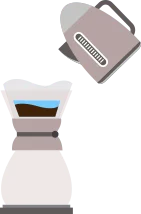
Add the ground coffee to the rinsed filter and shake gently to distribute evenly. Place the Chemex on the scales and start the timer.
Begin the blooming phase: gently pour twice the weight of coffee with water (about 35-40 ml) from the center in a circular motion. This stage allows the coffee grounds to „scatter” and release CO2, which ensures an even extraction. Wait 30-45 seconds.
6. Sub-amplitude water pouring and end of the process

After the blooming phase, slowly and evenly add the remaining water. Add small amounts (50-70 ml at a time) in a circular motion from the center to the edge, but do not touch the walls of the filter. Maintain a constant water level in the filter.
The whole process should take 4-6 minutes. If the process takes too long, grind the coffee a little coarser next time. If it takes too fast, grind it finer.
Once all the water has filtered, remove the filter with the coffee grounds and gently shake the coffee to mix the layers of aroma.
Chemex brewing features
- Unique filters: 20-30% thicker than normal, removes more oil and dust
- Design: A work of art recognized as part of the MoMA museum collection
- Clean flavors: Ideally reveals the characteristics of coffee beans without any impurities
- Temperature stability: Thick glass maintains the right temperature
- Visual process: You can monitor the entire extraction process
Optimal coffee types for Chemex brewing
Chemex is perfect for lighter to medium roast coffee, which allows subtle flavor nuances to unfold:
- Fruity: Bright coffee with fruity nuances and floral aroma
- Supreme: Elegant coffee with citrus and chocolate notes
- Colombia: Balanced coffee with caraway and nutty aromas
- Goldie: Premium coffee with complex aromas
Professional advice
- Water quality: Use filtered water with proper mineralization.
- Temperature: 92-95°C is the optimal temperature
- Cleanliness: Wash your Chemex thoroughly after each use.
- Filters: Use only genuine Chemex filters for optimal results
- Storage: Store in a dry place to avoid glass damage.
- Experimentation: Try different coffee types and grind sizes
Chemex vs. other methods
Chemex vs. V60: Chemex filters remove more oils, resulting in a cleaner and smoother coffee. The V60 allows more oils to penetrate, giving a closer flavor to the coffee bean.
Chemex vs. French Press: The Chemex produces a clean, transparent flavor profile, while the French Press produces a thicker, oilier coffee with more body.
Chemex vs. Espresso: Chemex reveals subtle layers of aromas, while espresso concentrates intense flavors in a small volume.
Common problems and solutions
Too slow process: The grind is too fine, try a coarser grind or check if the filter is properly inserted.
Weak coffee: Increase the amount of coffee or reduce the grind size slightly to improve extraction.
Bitter taste: Reduce the water temperature or increase the grind size.
Sour flavors: Increase the water temperature or reduce the grind size.
Conclusion
Chemex is not just a method of brewing coffee, but also a symbol of meditation, elegance and quality. This museum-recognized art object allows you to enjoy not only great coffee, but also the process of brewing. Chemex is ideal for those who appreciate the clean, subtle taste of coffee and want to enjoy the slow, careful ritual of brewing coffee.
With care and practice, Chemex will become a part of your coffee culture, providing a unique experience for every coffee lover.